Reading time: 8 min
When teams migrate approximately 50–60 on-premises VMs, manual EC2 provisioning quickly creates drift.
Problem
Each squad had slightly different EC2 resource definitions, naming formats, security group rules, and tags. Terraform existed, but code was repeatedly copied.
What changed
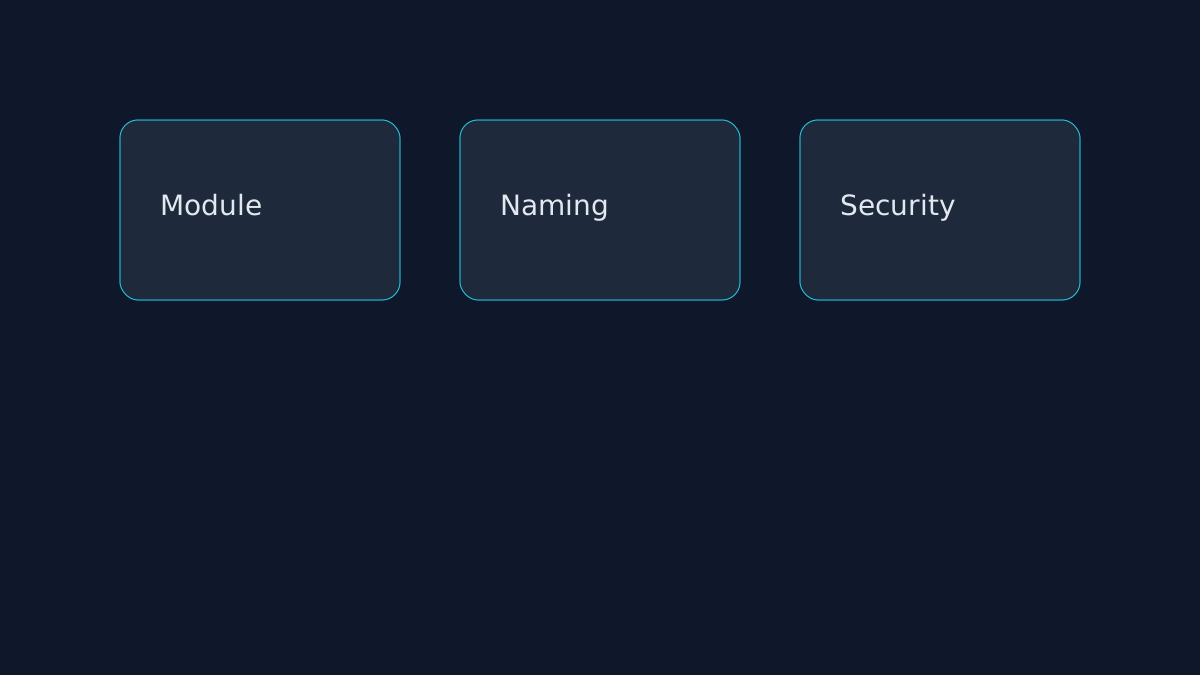
A reusable EC2 module was introduced to enforce:
- Standard naming patterns
- Mandatory business and operational tags
- Approved IAM role attachment
- Encrypted EBS defaults
- Monitoring baseline
- Backup policy controls
- Predictable security group structure
Why this matters
The goal was operational consistency, not a one-time migration script. Platform ownership became clearer, and application teams had safe module inputs.
Implementation notes
- Shared module inputs for environment, owner, and workload class
- Validation blocks to reject missing tags
- Encryption enabled by default
- Opinionated CloudWatch and Systems Manager hooks
Security and operations
Security teams reviewed defaults once and reused them. Operations teams used consistent tagging to map patch windows and maintenance ownership.
Lessons learned
Create modules that are strict by default but flexible where workloads differ.
Related articles
Architecture
Understanding Kubernetes Storage: Volumes, PVs, PVCs, and AWS Storage Options
A practical guide to Kubernetes storage concepts including Volumes, Persistent Volumes, Persistent Volume Claims, Storage Classes, and AWS storage options like EBS and EFS.
Jul 11, 2026
- Kubernetes
- AWS
- Infrastructure as Code
Architecture
Designing Scalable AWS Platforms for Multi-Team Delivery
A practical architecture approach for scalability, security, and platform-team enablement.
Mar 14, 2026 • 9 min
- AWS
- Platform Engineering
- Kubernetes
- CI/CD
Terraform
Reusable Infrastructure with Terraform Modules
Learn how to build reusable Terraform modules to eliminate duplicate code and provision AWS infrastructure consistently across environments.
Nov 16, 2020 • 7 min
- Terraform
- AWS
- Infrastructure as Code
- DevOps
- Modules